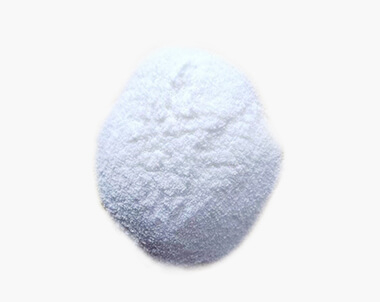
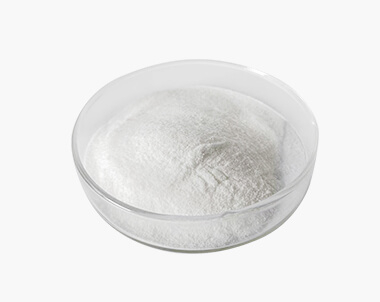
What is the particle size of microcrystalline cellulose?
The particle size of microcrystalline cellulose is a common source of confusion because MCC does not have one universal size. If buyers compare grades using a single number, they may select an unsuitable material or misjudge suppliers. We recommend evaluating particle size together with the grade, test method, dosage form, and required performance.
The particle size of microcrystalline cellulose varies by MCC grade, manufacturer, and measurement method. Suppliers may report sieve results, average particle size, or laser-diffraction values such as D10, D50, and D90.1 Buyers should therefore confirm the relevant specification and test method on the current technical data sheet and certificate of analysis.

In our supplier-side conversations, we often find that the better question is not simply “What is the particle size?” Instead, we ask which MCC grade fits the customer’s formulation, manufacturing process, and performance target.
How does the particle size of microcrystalline cellulose vary by grade?
A particle-size value without grade information creates a procurement risk. Different MCC grades are designed to support different processing needs, and even similarly named grades from different suppliers may not be directly interchangeable.2
The particle size of microcrystalline cellulose varies because MCC grades can have different particle distributions, bulk densities, moisture limits, and physical structures. Fine grades may support blending or compaction goals, while coarser grades may offer better powder flow. However, buyers should verify these effects through formulation-specific evaluation rather than relying on grade names alone.

Particle size affects several connected properties
In our experience, customers often begin with a requested grade such as MCC 101 or MCC 102. We then ask about the dosage form and process. This step matters because particle size can influence:
Flowability: Coarser particles may flow more easily through hoppers and tablet presses.3
Compressibility: Finer material may provide a larger contact area, but particle morphology and moisture also matter.4
Blend uniformity: Similar particle sizes among ingredients can reduce segregation risk in some formulations.5
Disintegration: MCC supports tablet disintegration through mechanisms that can include water uptake and swelling.6
Content uniformity: Particle distribution can affect low-dose blends, especially when the active ingredient has very different physical properties.7
No direction is universally better. A smaller particle size does not automatically mean stronger tablets or better uniformity. A coarse grade does not guarantee adequate flow under every production condition.
Dosage form | Tablets, capsules, and dry blends have different requirements |
Manufacturing process | Direct compression and wet granulation may need different MCC properties |
API characteristics | Density, dose, particle size, and flow affect compatibility |
Target tablet properties | Hardness, friability, disintegration, and dissolution must be balanced |
Equipment | Feed systems and press speeds can change powder behavior |
Other excipients | Lubricants, binders, and disintegrants influence final performance |
We treat published grade characteristics as a starting point rather than proof of performance. Formulation teams should conduct qualified trials under representative manufacturing conditions before approving an MCC grade or supplier substitution.
How should buyers compare the particle size of microcrystalline cellulose?
Two specification sheets may appear to show different particle sizes even when the materials have broadly similar distributions. The difference may come from the analytical method, sample preparation, calculation model, or reporting format.
Buyers should compare the particle size of microcrystalline cellulose only when the grade, test method, units, and reporting basis are aligned. D10, D50, D90, mean diameter, and sieve-retention results describe different aspects of a distribution. These values should not be treated as directly equivalent without technical review.8

Understand the reported indicator
Laser diffraction commonly describes a distribution with percentile values:
D10 indicates the size below which 10% of the measured particle population falls.
D50 represents the median of the reported distribution.
D90 indicates the size below which 90% of the measured population falls.
These definitions still require context. Results can depend on whether the method uses dry or wet dispersion, the instrument settings, the optical model, and the dispersion conditions.9
Sieve analysis reports different information. A supplier may state how much material passes through or remains on specified sieves. That result cannot be converted reliably into a laser-diffraction D50 without validated supporting work.10
Use a structured inquiry checklist
When customers contact us about MCC, we recommend sharing the following details:
Application and dosage form
Manufacturing process, such as direct compression or granulation
Current or target MCC grade
Required particle-size indicator, such as sieve limits or D50
Applicable test method and acceptance limits
Current TDS and representative COA requirements
Pharmacopeial, regulatory, and quality-document needs
Required certifications, which buyers should verify as current documents
Whether supplier substitution has been technically evaluated
Trial quantity and commercial volume
A certificate of analysis can confirm batch-specific results against an agreed specification. A TDS usually describes typical or standard product characteristics. We advise buyers not to treat a typical value as a guaranteed batch limit unless the agreed specification clearly defines it.
Frequently Asked Questions
Is MCC 101 always finer than MCC 102?
MCC 101 is commonly positioned as a finer grade than MCC 102,11 but grade names alone do not establish equivalence across manufacturers. We recommend comparing current specifications, particle-size methods, bulk density, moisture, and application data before approving a replacement.
Does finer MCC produce harder tablets?
Finer MCC may support compaction in some formulations, but it does not guarantee harder tablets. API properties, lubricant level, compression force, moisture, and other excipients also influence hardness. Formulation teams should confirm performance through controlled tablet trials.
Can D50 be compared with a sieve result?
D50 and sieve data should not be compared as if they were the same measurement. D50 represents a distribution median under a defined analytical method, while sieve analysis measures passage or retention through physical openings.
What documents should an MCC supplier provide?
We usually recommend requesting a product specification, TDS, representative or batch COA, safety data sheet, traceability information, and relevant quality or regulatory documents. Buyers should verify that certificates are current and suitable for their market and application.
Conclusion
The particle size of microcrystalline cellulose is a grade- and method-dependent specification, not one fixed number. Buyers should connect particle-size data with flow, compression, blending, disintegration, and the complete material specification. They should also align test methods before comparing suppliers or approving substitutions. Contact Besty Pharma with your dosage form, process, target MCC grade, specification, and document requirements so our team can help identify suitable options for qualified evaluation.